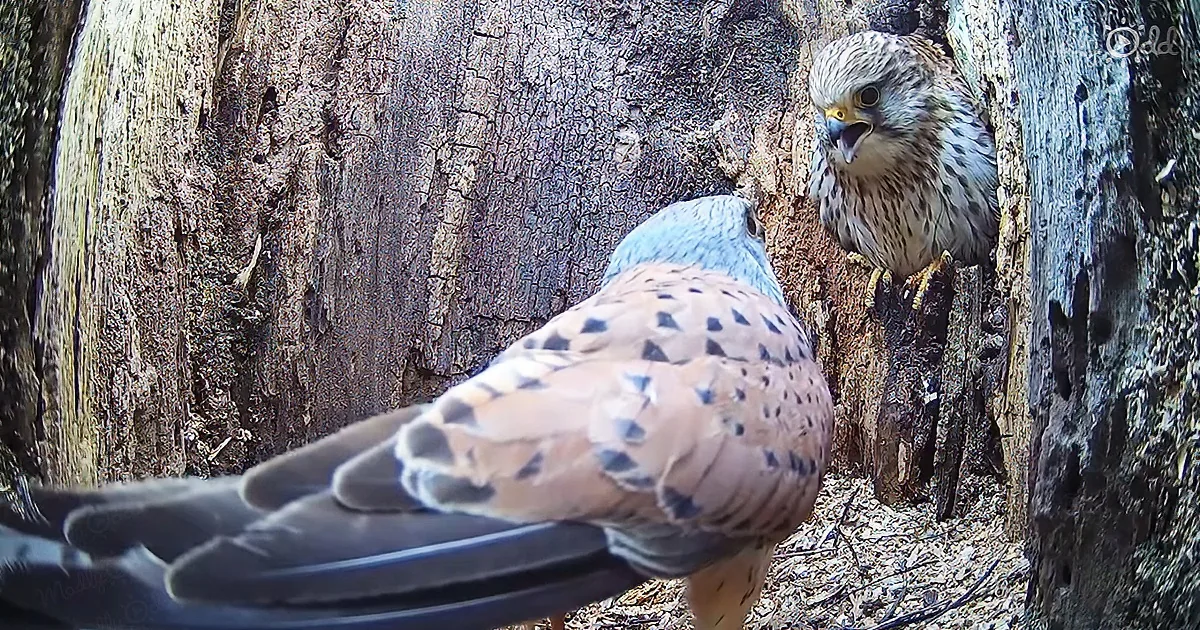
Robert E Fuller, a wildlife enthusiast, had been helping birds in Thixendale, North Yorkshire. He recently shared a fabulous real-life story about a beautiful Kestrel couple with totally different characters.
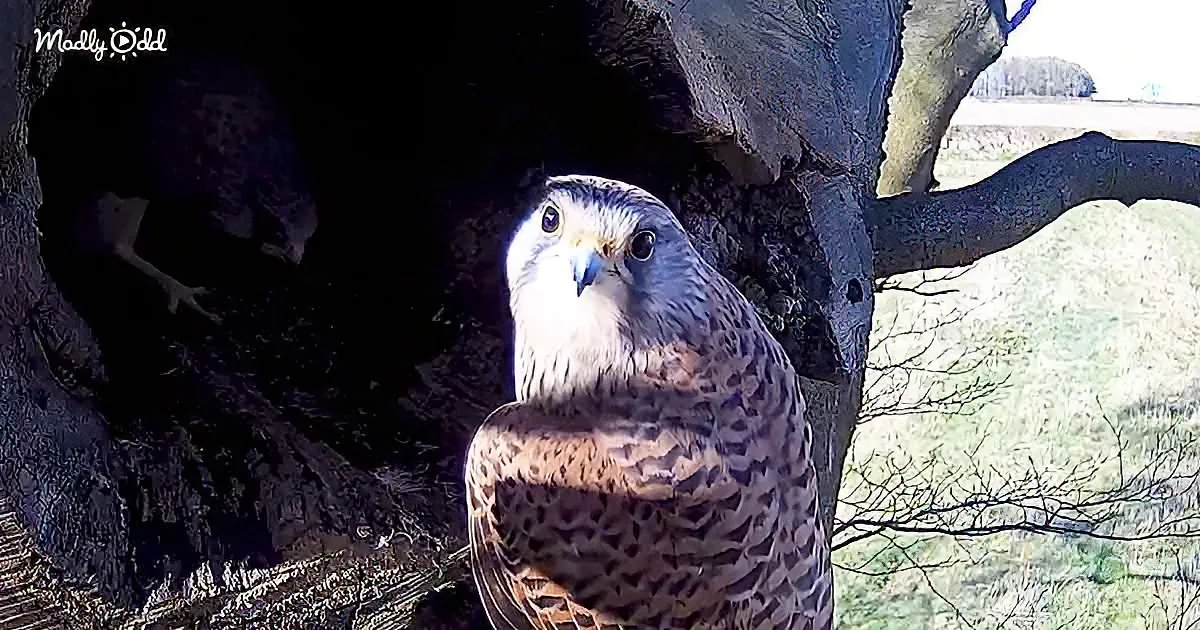
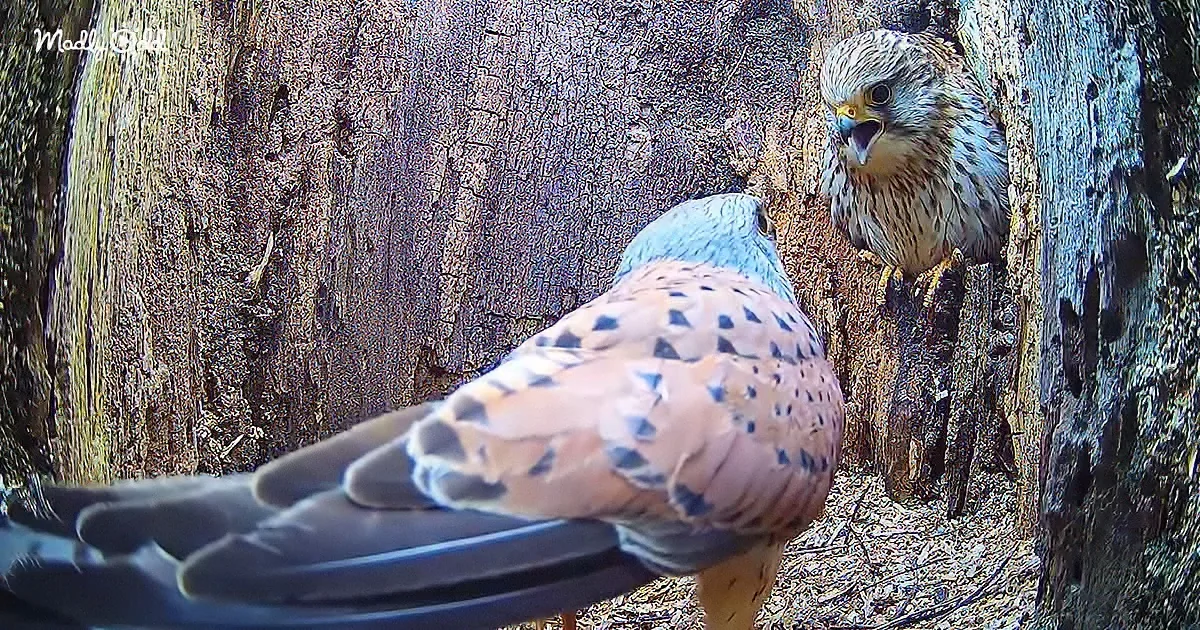
The male Kestrel, Apollo, was gentle-natured, while his partner, Athena, had a much dominant nature. The male bird was young and inexperienced; this was his first breeding season. Therefore, he was totally overwhelmed when Athena, the female Kestrel, responded to his calls.
Athena had possibly raised chicks earlier and was a no-nonsense female. She often got impatient with her partner's haltering attempts to please her. However, they wanted to go ahead with making a family.
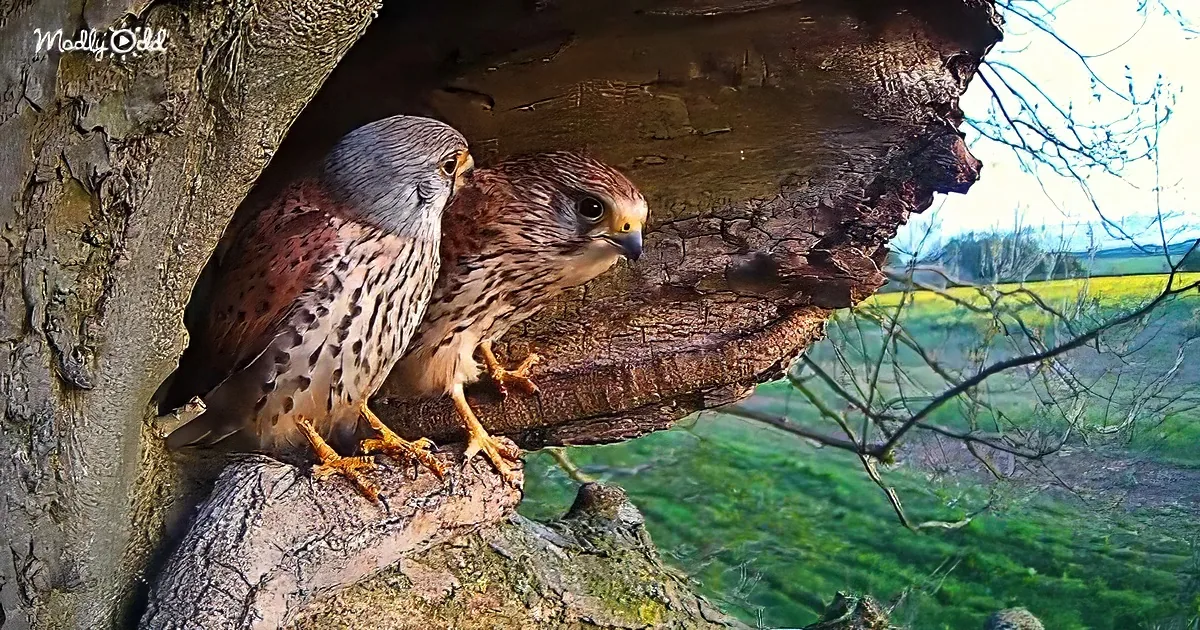
Unfortunately, there was competition for nests in the local neighborhood. The spot that Apollo tried to take was already occupied by another bird. So, Robert decided to help these innocent birds by creating a new nest for them.
After making the nest, Apollo and Athena settled down and started a new family. Soon the female laid her first set of 5 eggs. However, the couple still needed time to understand each other. Apollo soon understood who the boss was.
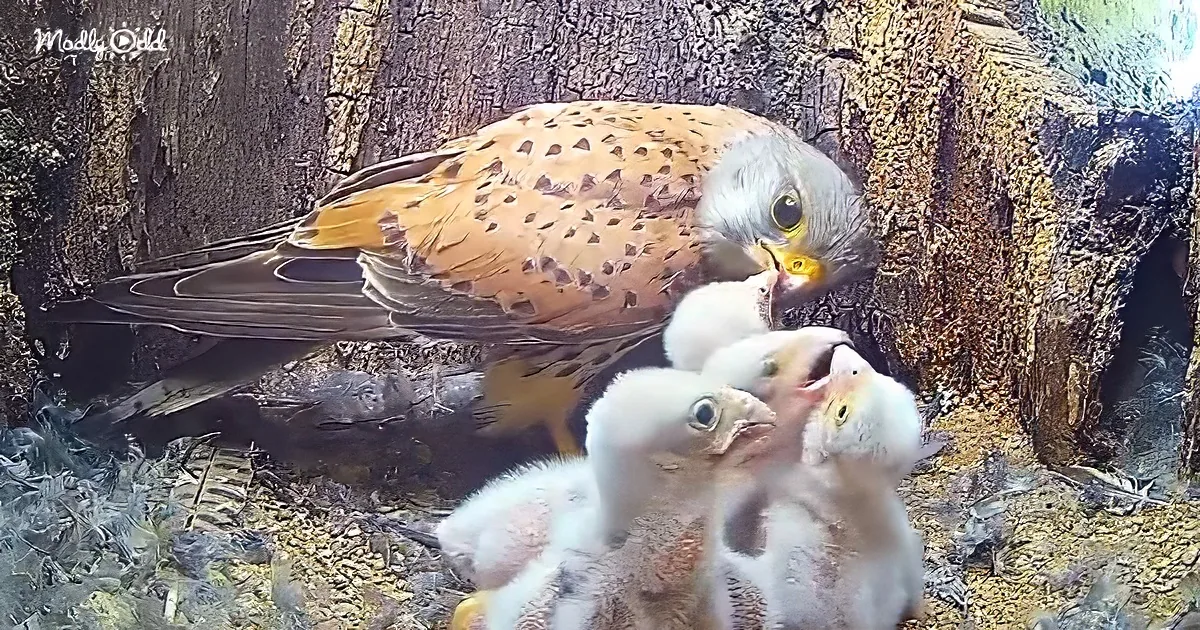
It was a cold, dry spring, and the rodents that these birds used to eat were very few. So Athena decided to join Apollo to hunt for food as she needed to feed the chicks. It was a tough call, and only 3 chicks survived.
Robert intervened and dropped some food in the nest for the 3 chicks to survive. Soon, the chicks grew and finally took flight. These little ones had a tough start, but their ferocity as they flew away showed that they would survive in the wild.