Incense and hairspray mingled in the air as bell-bottoms swished across shag carpets. On television screens across America, The Ed Sullivan Show was beaming George Hamilton's million-dollar smile into living rooms. It was March 17, 1968, and Hamilton was about to unleash a performance that would make jaws drop from coast to coast.
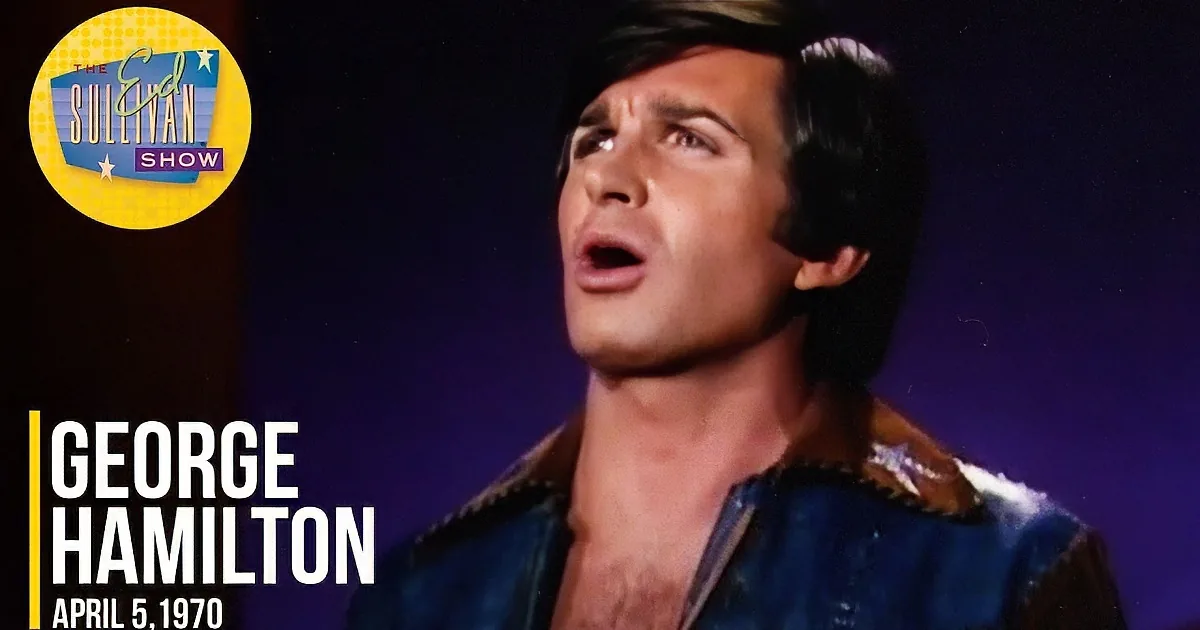
George Hamilton, Hollywood's bronze Adonis, stepped onto Sullivan's stage looking like he'd just stepped off a yacht in Saint-Tropez. His Nehru jacket gleamed under the studio lights, a sartorial choice that screamed "groovy, baby!" But it wasn't his threads that had America buzzing – it was what came next. Hamilton, known for his acting chops and that legendary tan, decided to flex his vocal cords with a rendition of Otis Redding's "(Sittin' On) The Dock of the Bay."
Hold onto your TV dinners, folks. This is about to get wild.
As the first notes hit, viewers leaned in, wondering if their sets were on the fritz. But no, that warbling croon was coming straight from George's pipes. His dance moves? Picture a dad at a wedding who's had one too many Singapore Slings, with a dash of "I learned this from watching Soul Train once." It was a sight to behold, a perfect storm of earnest effort and unintentional comedy.
The video below captures a moment in time when anything seemed possible – even George Hamilton as a soul singer. It's a reminder that sometimes, the most unforgettable performances are the ones that don't quite hit the mark.
Hamilton's foray into music might not have launched a thousand hit records, but it did cement his status as a pop culture icon. His willingness to step out of his comfort zone – way, way out – showed a self-deprecating charm that endeared him to audiences for decades to come. Plus, that tan? It only got deeper with time, becoming as much a part of his brand as his acting.
But wait, there's more retro gold where that came from!
While George gave it his all, nothing beats the original. Otis Redding's soulful masterpiece stands the test of time, a bittersweet reminder of a talent lost too soon. Redding's version, released posthumously, became an anthem for a generation and a timeless classic that continues to move listeners today.