
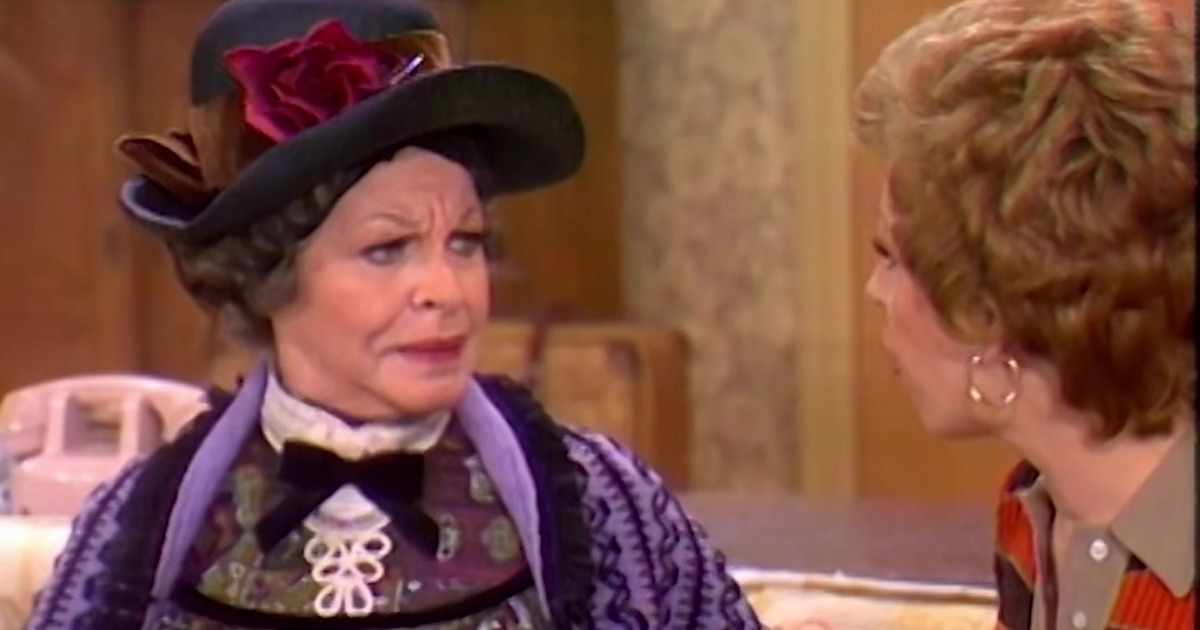
Saturday night on CBS, and the family has eaten and has nowhere else to be. The Carol Burnett Show sat in that slot for most of its eleven years, taped in front of a live audience with the mistakes left in, so what came into the house included performers cracking each other up and failing to get back. That was the appeal. You were watching people who were very good at this occasionally lose hold of it.
Martha Raye was born on this day in 1916, in a hospital in Butte, Montana, because her parents had a show in town that week. They were a vaudeville act. She joined it as a small child, which in that business meant she was working a stage before she could read a contract, and the habits she learned there never entirely came off.
Vaudeville taught people to play to the back of the house. There was no microphone worth relying on and no close-up to be had, so a performer scaled everything up until it reached the last row of the balcony. The face had to be readable from sixty feet. The voice had to arrive over an orchestra with nothing helping it.
Then television turned up and put a camera four feet from her.
That tension is the whole pleasure of watching her in a sketch. She does not shrink for the lens. She brings the balcony version into a room where everybody else has adjusted, and the scene reorganizes itself around wherever she happens to be standing.
Carol Burnett understood exactly what that was worth. Burnett had come up on The Garry Moore Show and knew what a guest who could genuinely carry weight was worth to an hour, so she booked people who could take a scene away from her and then played against them at full strength. There is no vanity anywhere in that decision, and it is most of why the show holds up.
Raye is loud, and loud is the least interesting thing she is doing. The interesting thing is that she holds a beat longer than the rhythm of the scene wants her to, so the audience arrives at the joke a fraction after she does. That gap is where the laugh lives. Performers who copy only the volume get nothing out of it.
Her nickname came from her mouth, which the studios put on posters for thirty years. She used it herself and turned it into a running gag before anybody else could get there first, which tells you most of what you need to know about how she handled a business that was not built for her.
She made pictures through the late 1930s and the 1940s, and the significant one is Monsieur Verdoux in 1947, where Charlie Chaplin cast her as a woman her co-star cannot manage to be rid of. Chaplin knew precisely what he had hired. The role gives her long stretches of physical business and she plays them like a woman who has been doing this since she was four, which she had.
The part of her life that stayed out of the sketch shows was the traveling. Raye went overseas again and again, starting in the Second World War and continuing through Korea and then Vietnam, and she did not simply perform. She had trained as a nurse and worked shifts in field hospitals between shows, sometimes for weeks, in places where the entertainment schedule was the least urgent thing happening. The Army made her an honorary colonel. The Green Berets made her an honorary member, which they did not do casually. In 1993 she received the Presidential Medal of Freedom.
None of that is visible in a ten-minute comedy sketch about hiring a maid, and it is worth carrying while it plays.
Your mother knew all of this, or knew enough of it. She had grown up with Martha Raye on the radio and at the pictures and had a settled opinion about her long before any Saturday night. You came at it from the other end, through Carol, and met her as the guest who took the room over. One sketch had the two of you watching the same woman for completely different reasons, which is about as good as a Saturday night gets.
She was born on this day in 1916, in Butte, between shows.
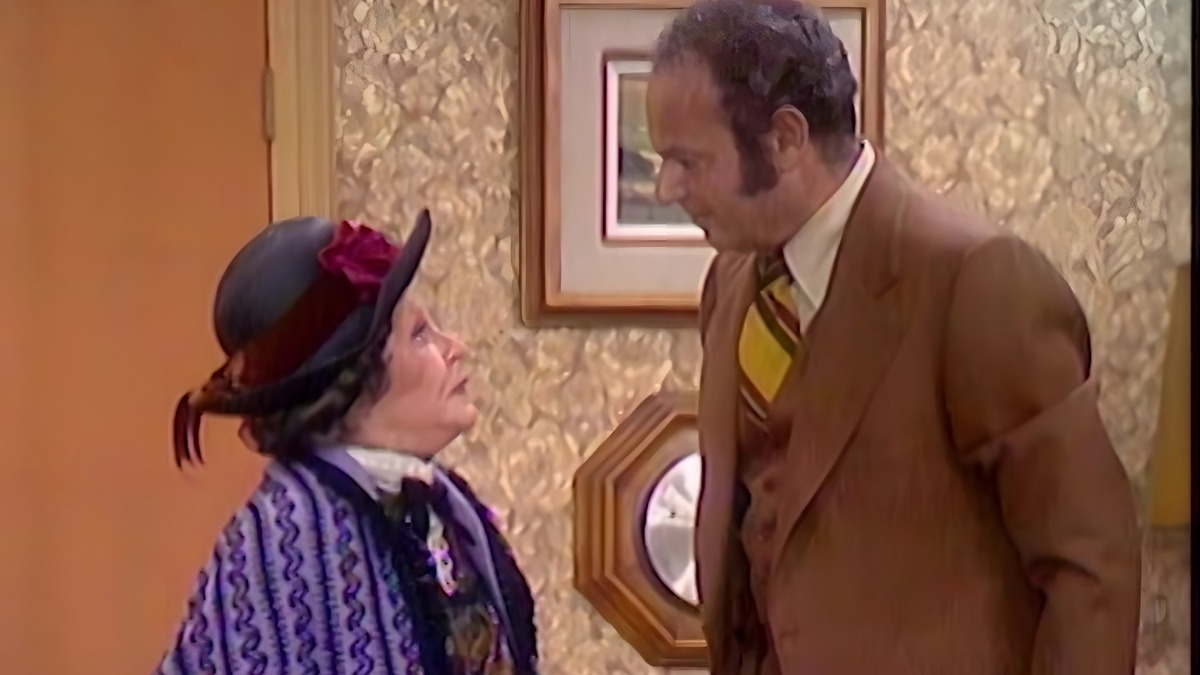
The Carol Burnett Show on Amazon, if you feel like it. We make a few cents when you buy through us. No grand pitch, just how we keep this running.