Home economics is one of your most memorable courses in school. The class usually taught you the basics of sewing, cooking, and cleaning.

But the class has changed over time. Those from the 1950s remember many different lessons. This documentary from that era reveals what teenagers learned in 50s home economics.
The film centers on Kay, a girl lost in thought during study hall. In her study hall are other students. Alice works on her physics project while a boy bothers girls.
The narrator says it's a typical day but may turn out different. The girls proceed to the auditorium when the bell rings for the assembly. Kay takes a seat next to the aisle.
An adult woman approaches the girls. She speaks about girls who were wondering what to do after high school. She uses Evelyn as an example.
Evelyn, as she describes herself, went to college for home economics. The narrator brings up how she's now a tea room manager. Footage of her finds Evelyn overlooking a kitchen.
Kay imagines herself in such a position. The narrator assures the audience that running a kitchen is not that much different from cooking at home.
The footage then moves to show off Joanne. She decorated in high school and now decorates professionally as an adult. The narrator mentions how she would help with appointments and home design.
The narrator then stresses how many successful women took courses in home economics. The jobs involve various skills, including education, equipment management, textiles, child development, and even journalism.
Another example is given with Carol. Carol didn't go into a career but instead became a homemaker. Kay imagines being prepared for home life as a wife and mother.
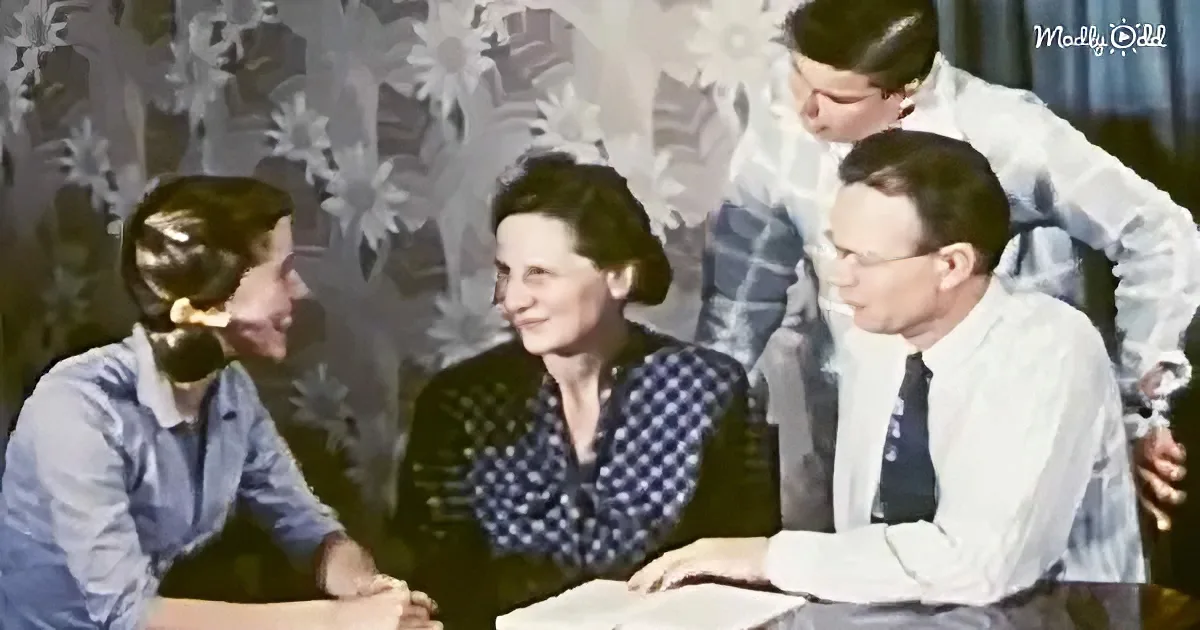
Back in school, Kay considers going to college for home economics. She discusses it with her parents and realizes it may be a tough call for mom and dad. After learning how important it is, Kay's parents agree to pay for her college.
Kay sends off her college admission forms in the mail the next day. Days later, Kay finally receives a confirmation letter. She's approved for college!
Kay is so excited she packs for college early. The film then transitions to Kay finding her way onto a college campus with her folks.
Kay is introduced to her dorm room. It looks empty, but the narrator assures us it will have a homey look soon. The moment comes when mom and dad say goodbye.
Kay is now on her own. It's a strange new feeling. Her loneliness is replaced with chatter when her roommate Gene arrives. Two other girls from the dorm visited as well.
The narrator speaks of how these four girls will spend much time together at college. They'll have rituals and bonding events. College becomes their new home.
In October, Kay and her friends attended her first home economics course that involved design. Some of them develop their clothing.
Every course seems tied to home economics. Physics, for example, is based on how everyday household items operate. Appliance usage is studied as well.
The how and why of nutrition are also covered. For more fun, sports are in the curriculum as well. Some students enjoyed the sports so well that they went into the careers of physical education.
As Kay and Gene study at night, the narrator assures them there's much to learn at college. The film then transitions to the sophomore years. Kay and Gene are still friends.
The four friends now talk about new jobs and classes they're taking. One of them is taking chemistry. This topic is noted as being valuable for cooking.
Classroom footage showcases how chemistry can be applied to textile work and cooking. An example is shown in how fabric can be manipulated with chemicals.
The film transitions to a Saturday afternoon of college football. Many students gather to watch the game. After the game, they all meet up for a snack.

One evening, Kay and her friends set around discussing their majors. Gene mentions she wants to go into clothing. Kay, however, is unsure about which profession to choose.
Kay chats with her advisor about what to consider for her profession. Even something like teaching has many different jobs to choose from. The same goes for chemistry.
Junior comes, and the narrator says it's time to specialize in your chosen field. The other girls are focusing harder on the details of their career paths.
Gene is shown to be deeply involved with fashion. We see her designing clothing. The narrator mentions how Gene might be the designer of tomorrow.
Kay has taken an interest in education. She attends a class on child development. Gene finds this valuable class for her profession as well.
Kay writes home about her education. She also writes about the college prom and what she'll be wearing. The narrator brings up how college is a beautiful time to enjoy its many happy times.
Senior year comes, and the narrator's notes are not much different from junior year. Everybody is still working just as hard as they were last year.
The film then cuts to footage of the home economics building on campus. The narrator attempts to answer the question of what exactly home economics is.
It's more than just tech, clothes, food, education, and home design. It's all these and more. The narrator showcases how all four girls pursued different careers.
For their final step into adulthood, the girls take on a particular task from their advisor. They manage a home using all their skills. It is here where all the knowledge and training pay off.
Happy times are shared between all the girls during this project. One of them even announces an engagement!
College life will soon be coming to an end. The girls seek a job out of the job placement office. They are all successful.
Graduation comes, and Kay's parents are present. They're incredibly impressed with Kay's work. The friends depart their separate ways, leaving each other at a train station.
Kay reflects on how far she has come. The narrator brings up how this was an essential chapter in her life.
Home economics went much further at college than one might expect. It's surprising how different things were back then and how much career focus has changed over time for women.