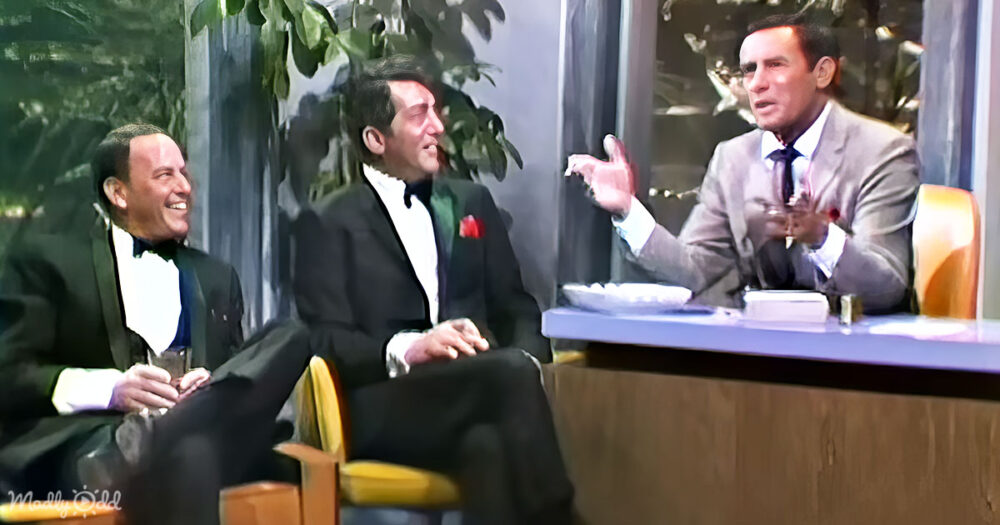

The 60s was a golden era when class and charisma were as essential as talent. Imagine this – a night in October 1965, millions of eyes glued to their television sets as the suave Joey Bishop steps up as the guest host on the iconic Carson Tonight Show.

Now, this is different from your average TV night. It’s about to become legendary as two of the most charismatic men of the time, Frank Sinatra and Dean Martin, grace the stage. As Sinatra and Martin entered, the ambiance altered by a beat. It was as if the show had slipped on a luxurious velvet jacket, exuding an aura of sophistication and charm.
The jokes were easy, the laughter genuine, and the chemistry between the three men evident. It was a glorious time when humor was shared openly and without hesitation, without the fear of offense. Every wisecrack, every quip, was met with hearty laughter. Remember when Dean asked, “Hey, where’s that Johnny baby?” The reply, “It’s back there,” epitomized their effortless humor.
Watching the show, one couldn’t help but be swept up in the good-natured banter and infectious camaraderie between Sinatra, Bishop, and Martin. The trio played off each other seamlessly, like a well-rehearsed jazz band, each lending his unique touch to the collective harmony. Joey Bishop held his own among these giants, deftly managing Dean Martin’s playful pestering with a wit as sharp as his suits.
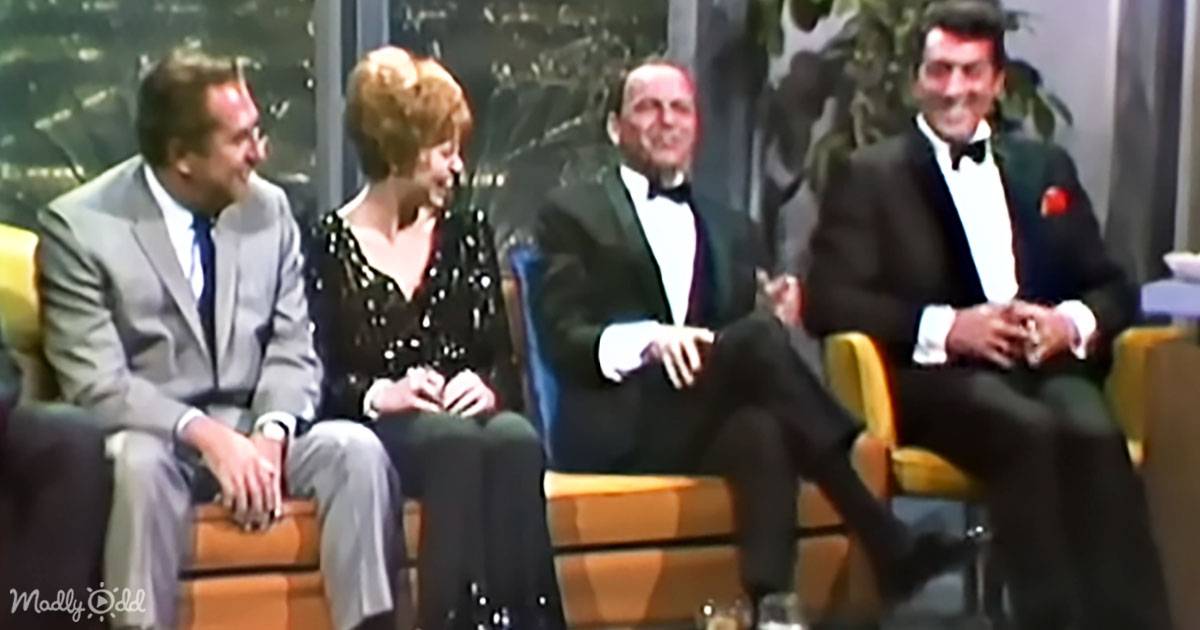
Our attention, however, must now shift to a younger but ever-charming Ed McMahon. It’s refreshing to glimpse him in his early days, even handling commercial duties (Budweiser) with the charisma we’ve come to associate with him. The sight of him on stage, alongside the legends, is enough to set off a wave of sweet nostalgia.
But the star of the night, the crowning jewel, was undoubtedly the brilliant Frank Sinatra. The name itself evokes a sense of awe and admiration. Sinatra was not just a singer; he was an experience, an emotion. It was not about the notes he hit but the hearts he touched. And that night, he did precisely that with his rendition of “Angel Eyes.”
“Angel Eyes” is more than just a song. It is a sentiment, a haunting melody that seeps into your soul and stays there, making you feel emotions you never thought a song could evoke. The atmosphere transformed as Sinatra began to croon the last few bars of this iconic number.
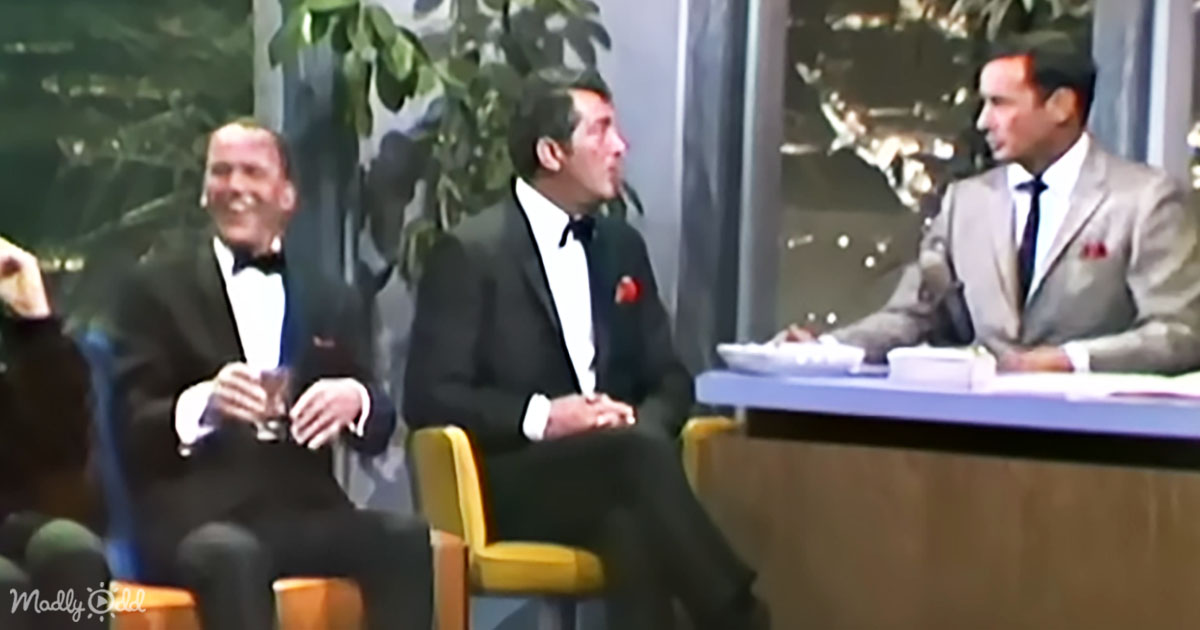
Sinatra’s smooth, mellow voice, filled with emotion, reverberated through the studio, capturing every listener’s heart. The last line, when he softly whispered, “Excuse me while I disappear,” marked the climax of an unforgettable performance.
With those words, Sinatra didn’t just sing; he narrated a story, painting a poignant picture that was as captivating as it was moving. It was a night where the magic of television met the charm of Sinatra, Martin, and Bishop, creating a spectacle that continues to captivate us today.