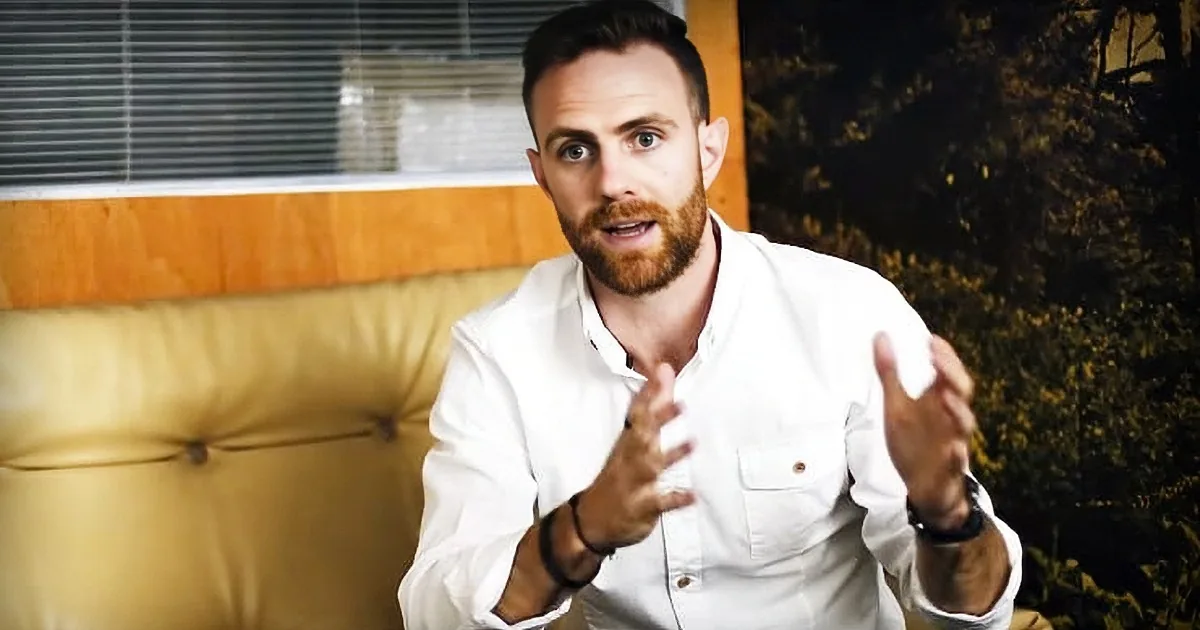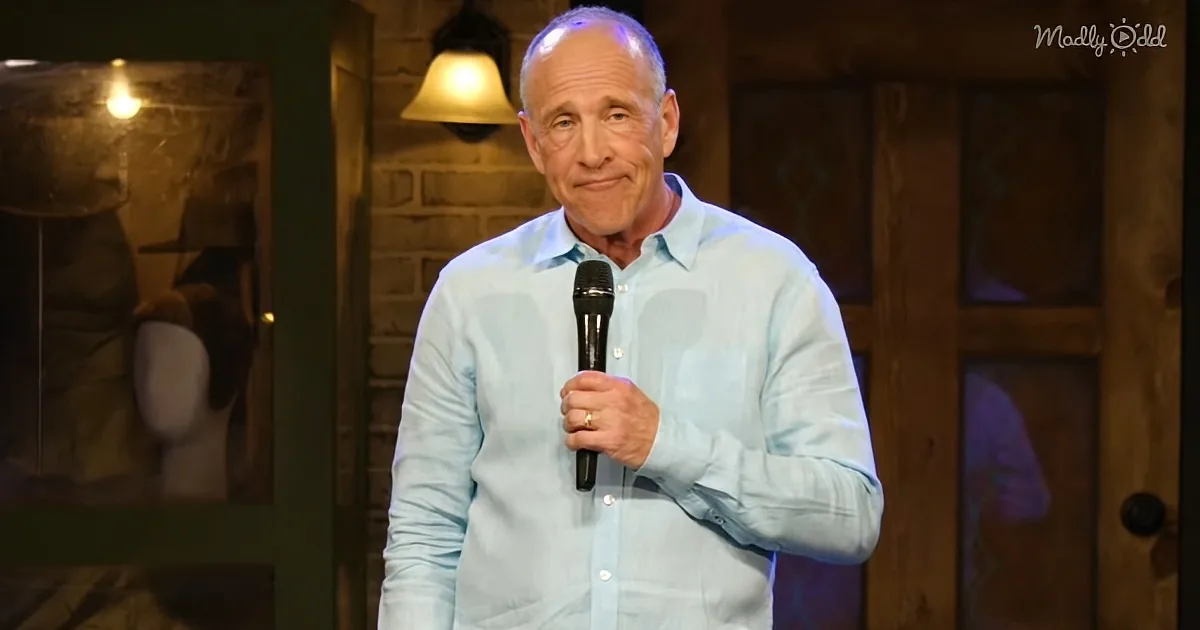
Chances are, somewhere on some part of Facebook, you are getting a request from someone you don’t know.
I wanted to share with you the types of fake accounts that prowl our pages and the steps you can take to prepare and protect yourself and combat them. Here are the details our staff collected while hunting for these fake accounts.
Examples of what makes up fake accounts:
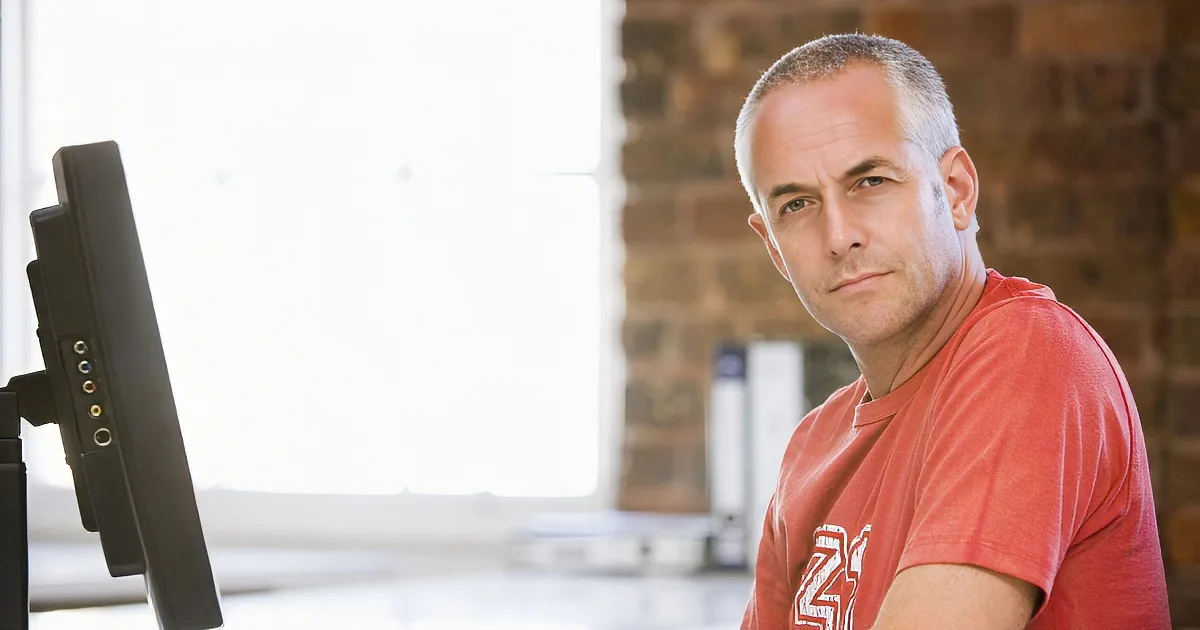
 1. They used an image they stole, which we often find by using TinEye. com. The ones I love are stolen from stock image sites with a clear copyrighted watermark. As you can see from the image on the right, this guy stole one of his profile pictures from a stock image site. The stock image site's watermark is clear. He also claimed to be in the U.S. Army. However, that striped shirt under his fatigues is common in the Russian military.
2. Despite stealing pictures of someone, there is very little personal information. While they have a few images, they took from someone else. The bulk of the images show no picture of themselves. (for those out there pointing out I have cats for profile pics, I don’t like having my picture taken). They may spam share posts from other pages to make their page look like a real person. But you are not going to see a lot of pictures of their own.
3. They have a first name as the last name, like Joseph John or Steven Jennifer. A few weeks ago, I encountered a Williams John. We also get fake accounts like Page Appeal and Facebook Support pretending to be with Facebook and trying to get me to click on links to hijack our accounts.
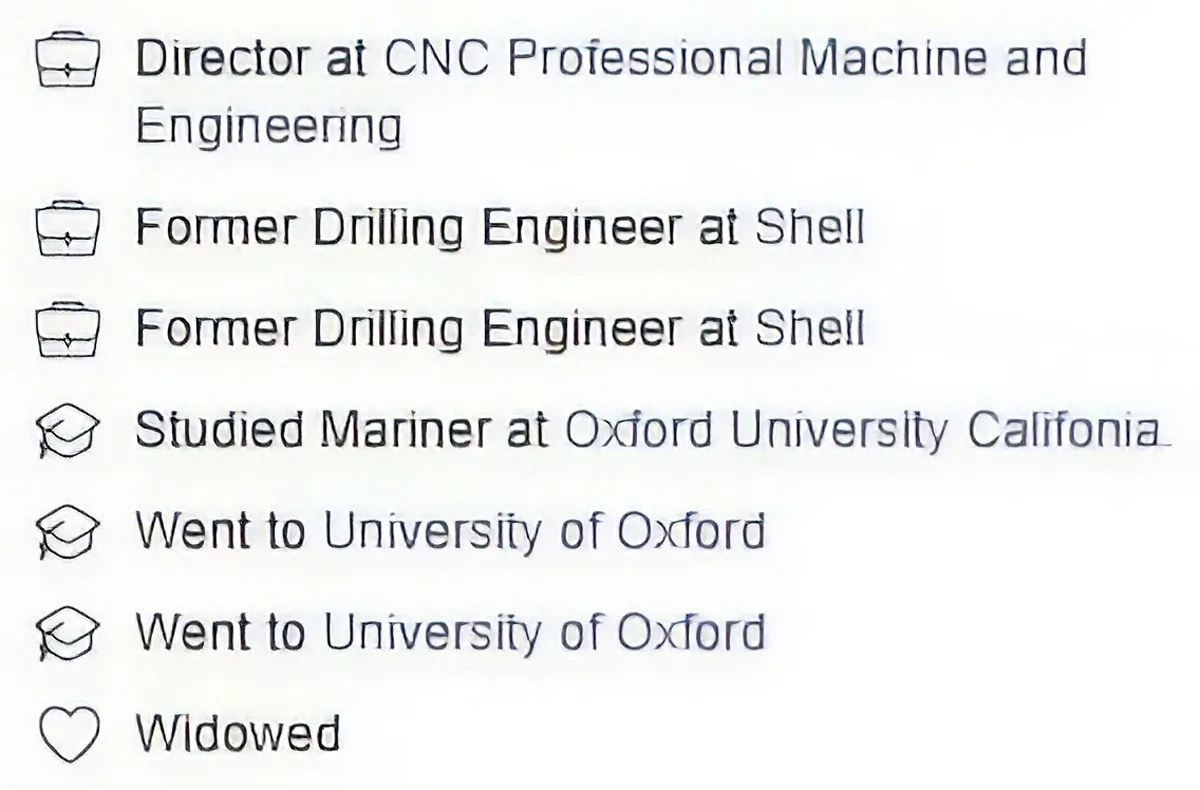 4. Career: Oil business, military, finance, retired. Mostly trying to show that they have or came from a high-paying career. Sometimes they show pictures they snatched from real-estate sites of houses, which you can use tineye. com to find out where they stole it from.
5. They are Divorced, Widowed, or Single.
6. Accounts were often created minutes, if not hours, before trying to "friend" people. There are older accounts. But these are usually older accounts that used bad passwords and/or were hacked.
7. They have the option to send them money on their profile.
8. Friends: They either have very few friends, many friends from another country, or lots of friends of a particular gender around a certain age (the people that fell for the scam).
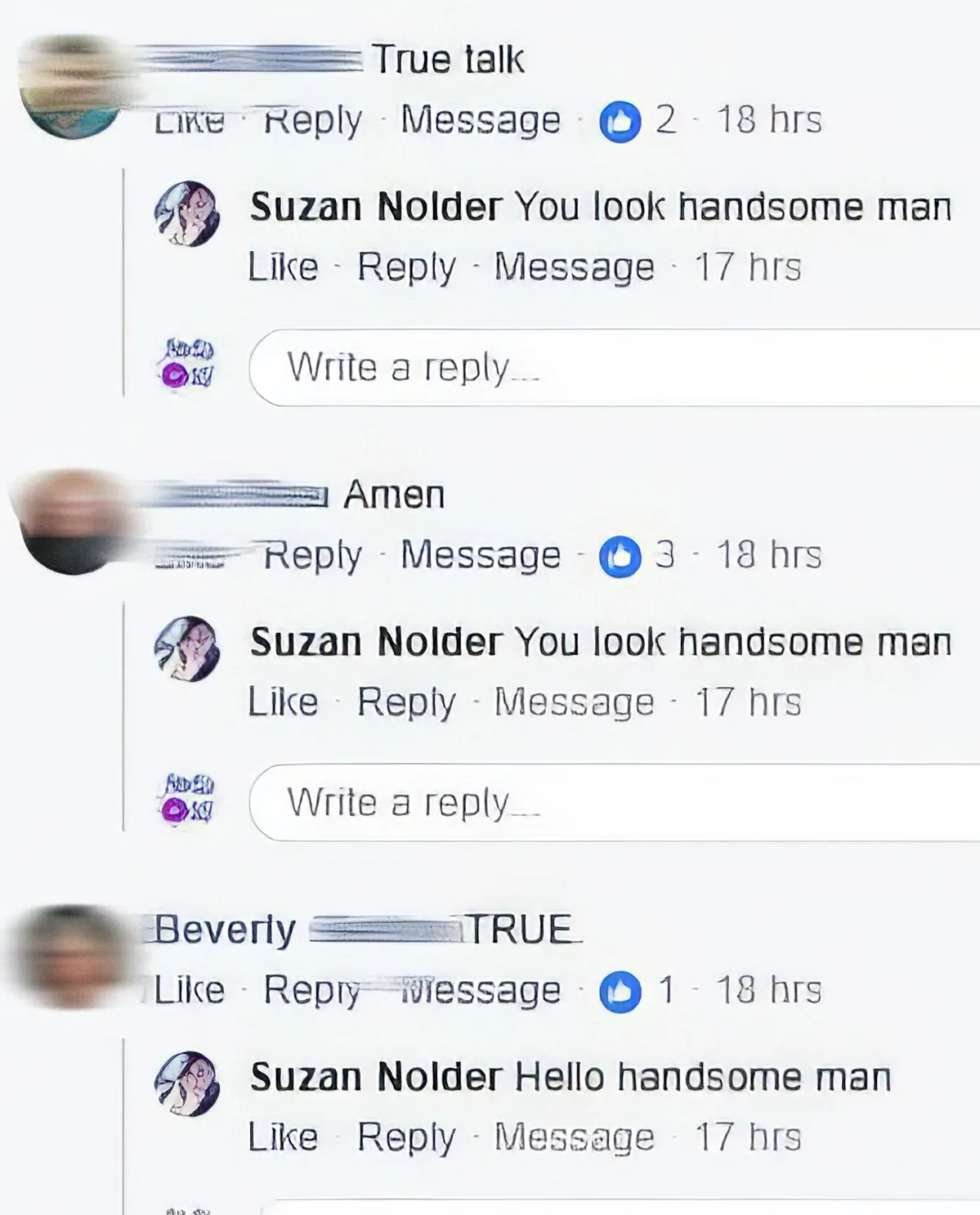 9. They comment on multiple people’s comments. They will tell you things such as how beautiful you are or give you some other compliments. If they don't ask for a friend request in the first reply to your comment, they create a second reply that asks you to add them/be their friend/accept their friend request.
10. They don’t quite have a handle on the English language. You see the usage of terms that many people don’t use. One example is guys calling someone dear. They may not even understand that Beverly is not a man’s name. Or Benjamin (that is me) is not a female name.
Why are these people contacting you?
There are a few different reasons. The first and most likely reason has to do with point 7. The option to send money is on their profile. Some of these fake accounts have people complaining on the fake profile pages about money being sent only to figure out the account was fake.
Something that does not happen with Madlyodd. com but with other pages in the Reactcore group is fake accounts that were created to push an agenda. In some cases trying to promote positive reviews on a product to try and counter the real negative reviews. Others to drive a company’s product, often on an unrelated topic. For example, in one of our posts on a cute puppy doing something funny, they want you to click on a link to tell you how to make money from home. Some are even trying to push a political agenda.
Others are purely destructive, and they target products, people, and groups…… for the pure purpose of bullying or intimidating.
Other scams to avoid:
If you are a fan of our page Madlyodd. com, then you know that it is about stories of hope, redemption, wonder, and animals. We are not about dating, some get rich quick scheme, or other scams these individuals may think up.
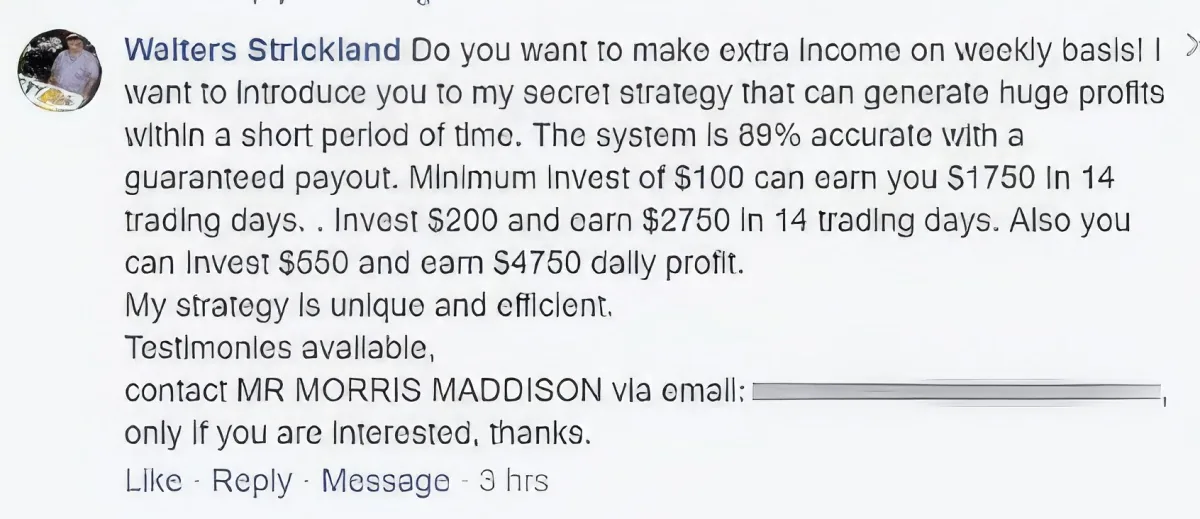
What can you do to combat this menace?
Any time you find someone who tries to friend you or someone else in the comment section (or chat you up/get to know you better).
For PC Users:
1. To the right of the offending comment, there is a not-so-visible ‘…’. You can get to it by moving your mouse near that area.

2. After that, you have some steps to take to remove the comment(s) and the fake account from Facebook. You will select "Hide Comment."
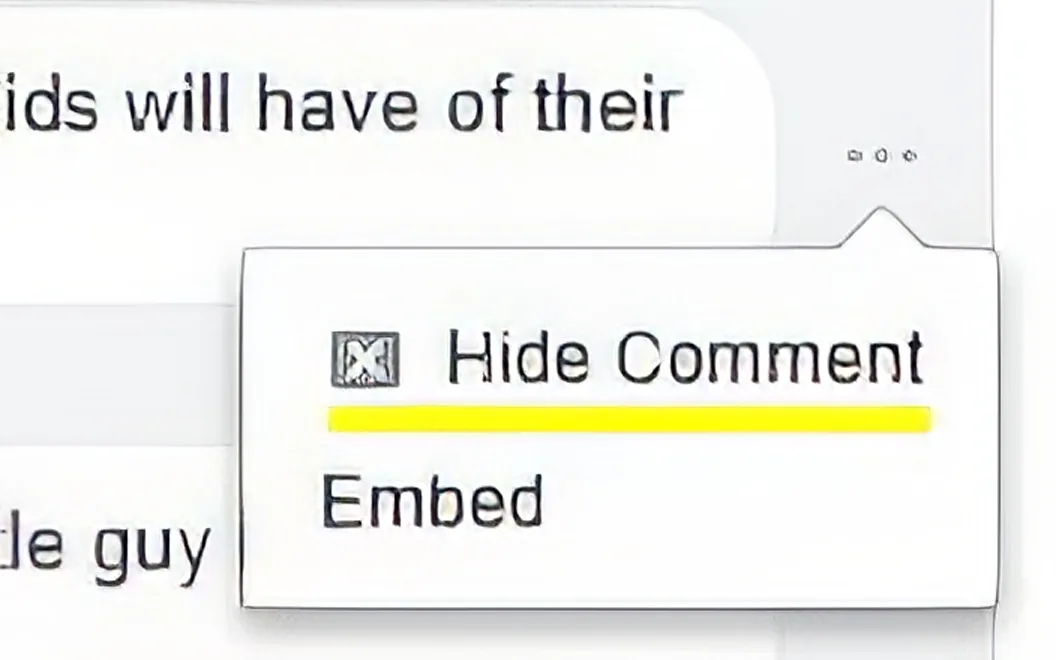
3. After you click to hide the comment, you will get more options below the offending comment. The one you want is ‘Report’.
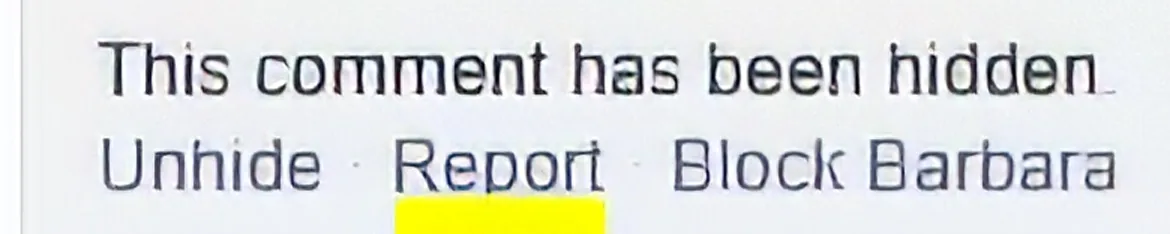
4. Once you do that, you will be asked, “What’s going on?
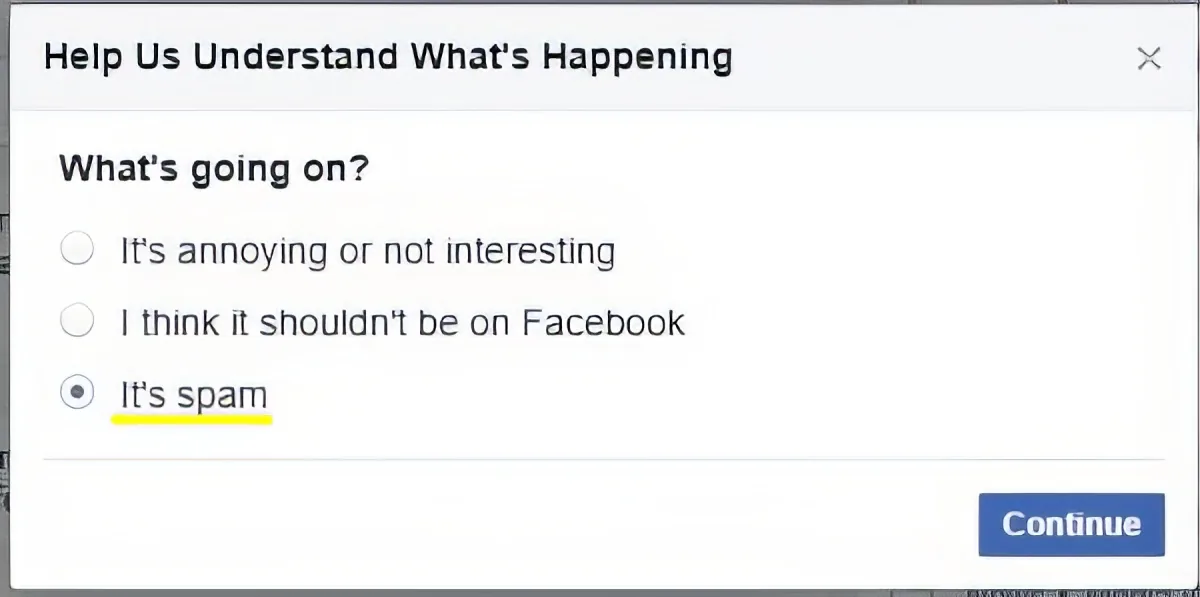
You will select “It’s spam” and hit continue.
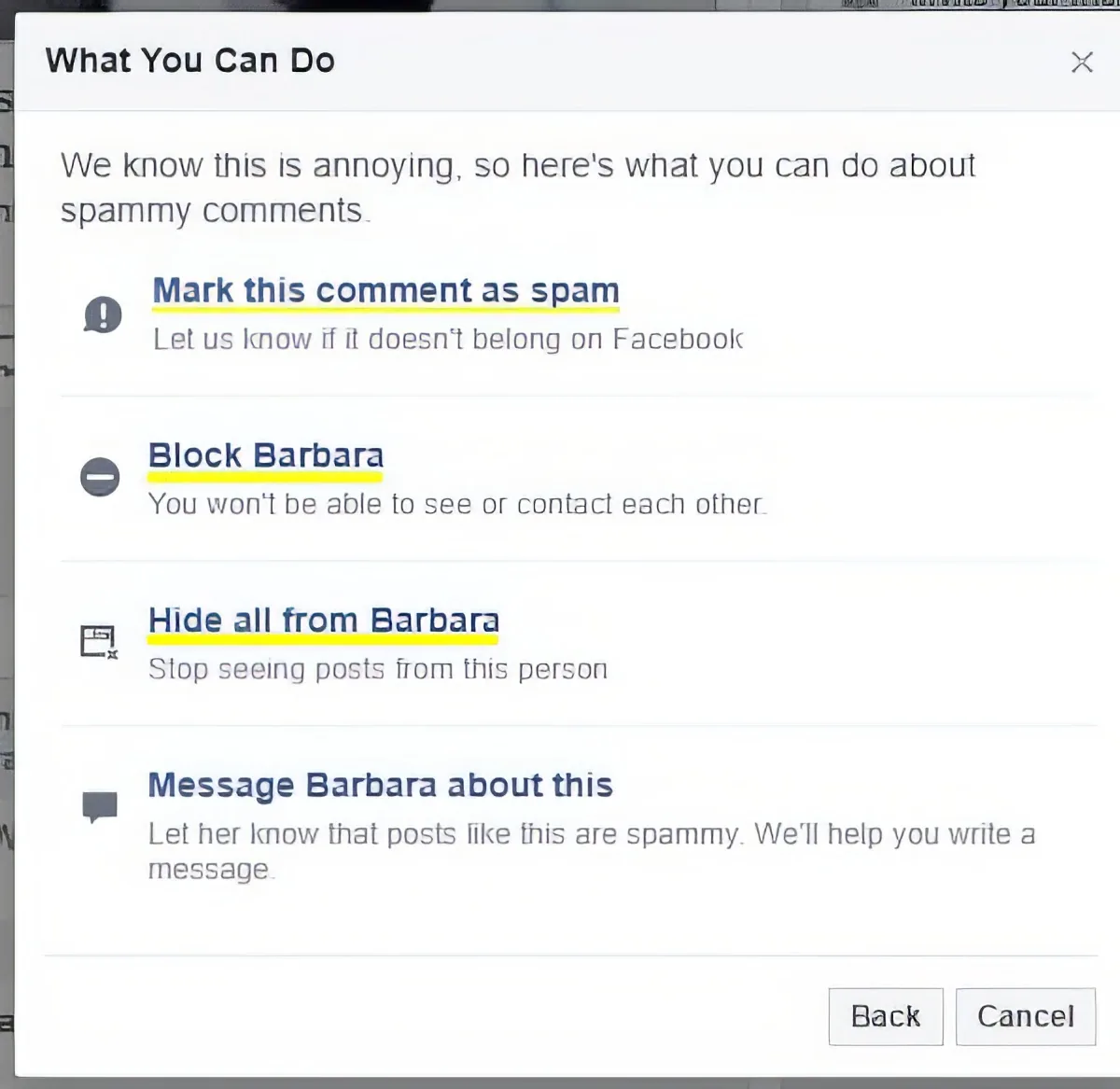
5. After you push 'continue,' you get the final screen. Choose the first three options. Do not contact them.
For Tablet and Cellphone users:
- Hold your finger over the offending comment. You will get the following options:
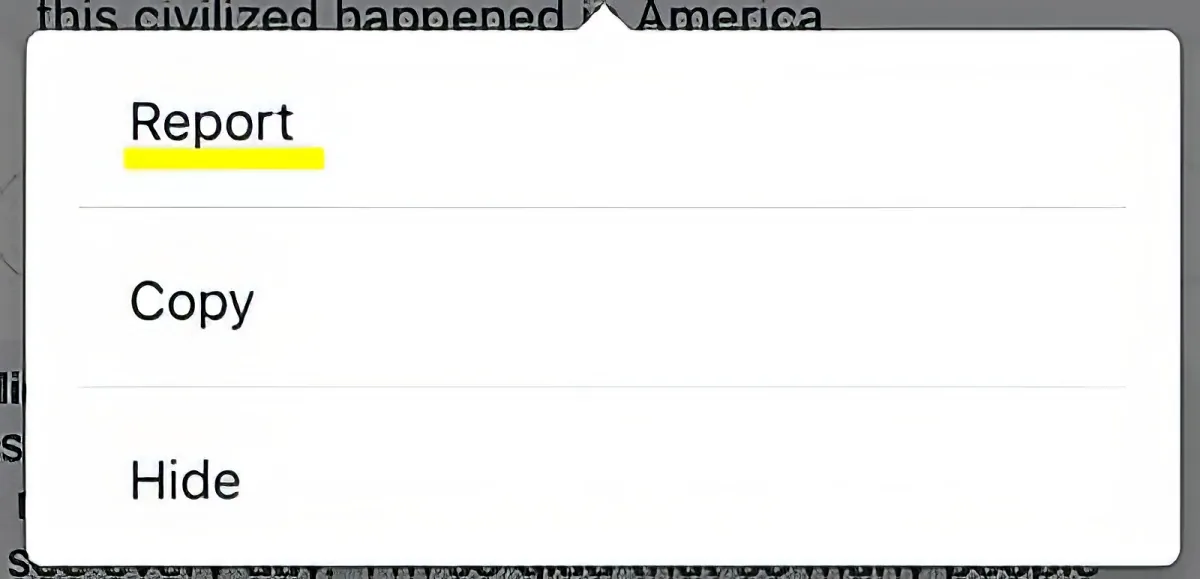
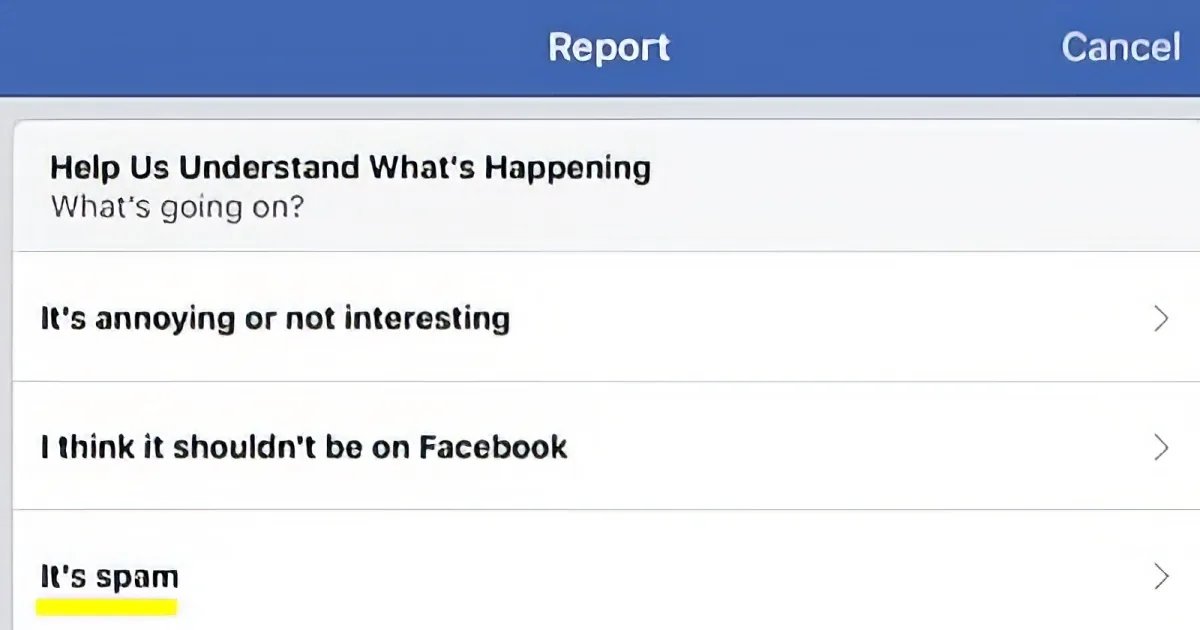
2. Under the report option, pick "It's spam".
3. The last is to select: Mark this comment as spam, Block (person's name), and last Hide all from (person's name).
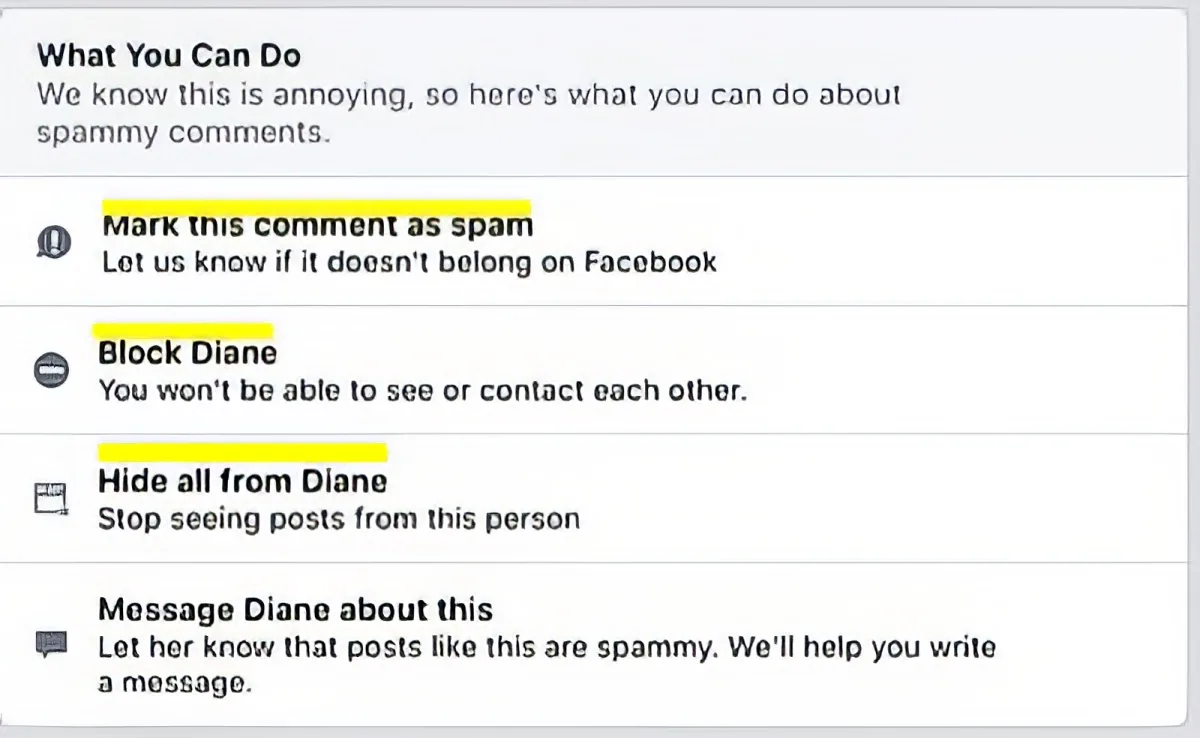
The first option is the most important and will get Facebook to shut down the fake account: Mark this comment as Spam.
The last two ‘block’ and ‘hide’ options will tell Facebook that you are serious about this being a fake account. You will also no longer see any content from them.
Clean up your friends list.
Do you know all of the people on your friends list? Did you friend anyone just because they sent you a friend request?
Chances are, if you have 200 or more, you may not know all of them. All these people you do not know will clutter your news feed. This keeps you from seeing your actual friends' posts, not our posts.
I find it surprising that Facebook has not taken steps to counter these fake accounts, especially when they have software that will not allow us to advertise anything with too much text in the image. What will get Facebook to change? As my grandmother used to say, the squeaky wheel gets the oil. If enough people report these fake accounts, Facebook will be forced to consider other measures than just letting people report fraudulent accounts. Otherwise, they will get overwhelmed by all these requests to close down counterfeit accounts.